Aðalheiður S. Eysteinsdóttir
Hringrás lífsins er það sem við, og annað líf á jarðkringlunni okkar, viljum viðhalda. Við fæðumst og ölum af okkur líf sem vex og dafnar og viðheldur síðan hringrásinni. Tengsl móður og dóttur eru á meðgöngunni með naflastreng. Síðar þróast þau með viti bornum mannverum, tengsl sem ekki er hægt að sjá né þreifa á en eru samt sem áður áþreifanleg og endast úrfyrir þessa jarðvist.
Tré og plöntur hafa rótarkerfi innan hverrar tegundar, og um það fer gríðarsterkt samskiptanet. Þannig huga þau að skógarbotni jafnt sem sólarljósi fyrir uppvaxandi einstaklinga. Sýnt hefur verið fram á þessa tjáningu eða tungumál lífvera, ótrúlega flókin og fjölþætt boðskipti.
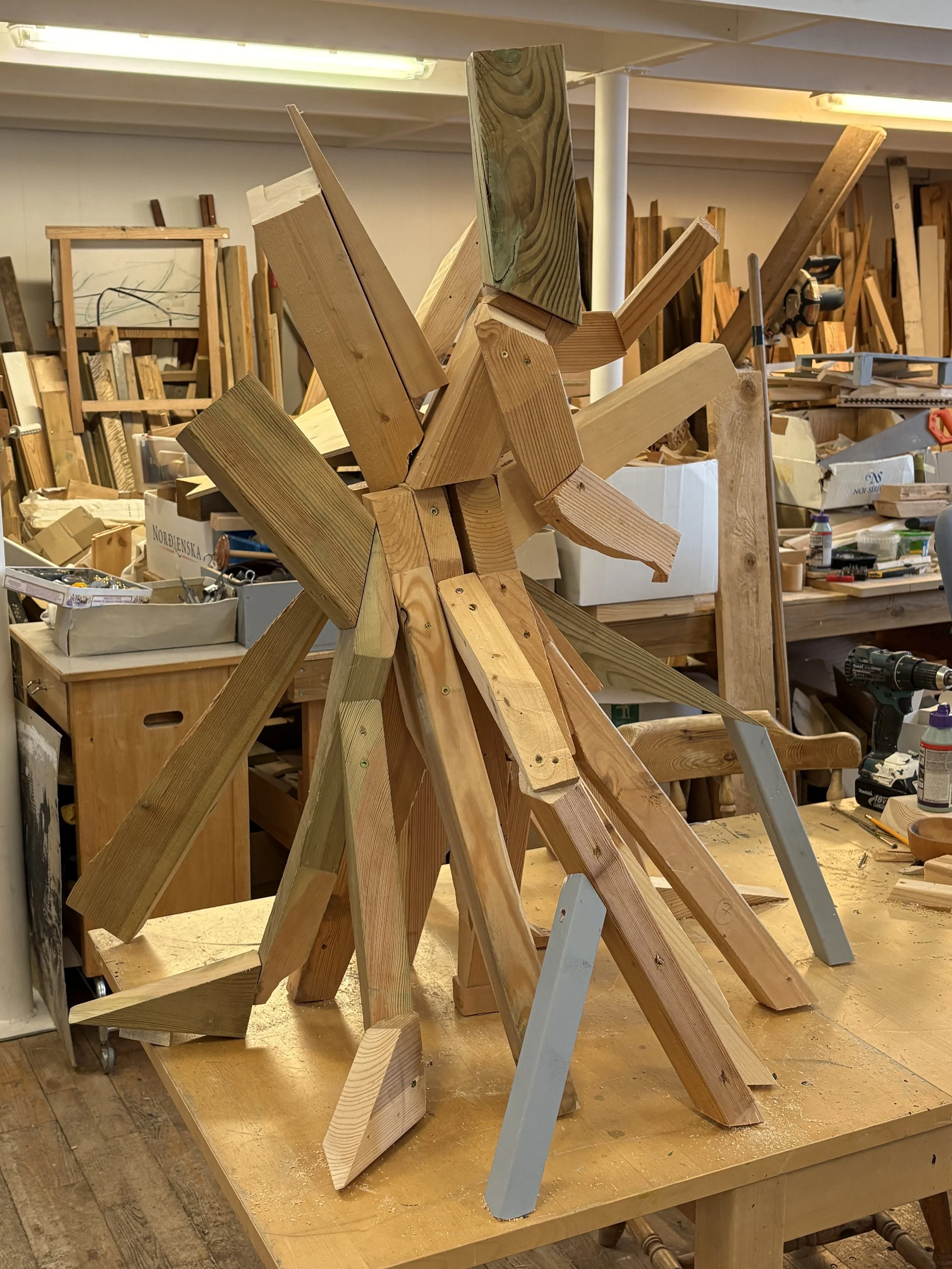
Tjáning mín í listsköpun hefur á undanförnum þrjátíu árum aðallega fengið farveg með timbri. Þar hef ég mótað hugmyndir og fellt niðurskorið iðnaðartimbur að verkum mínum, og timburilmur verið hluti af heimilishaldi mínu. Oft á tíðum hafa verkefnin flætt um allt hús og tekið þannig yfir heimilið. Í gegnum öll þessi ár hef ég smám saman öðlast meiri virðingu fyrir hráefninu og uppruna þess. Hringrás er yfirskrift verksins. Þar er um að ræða hringrás á þrjá ólíka vegu. Í fyrsta lagi hringrás móður og dóttur þar sem kraftmikið og stórt tré vex upp af lítilli stúlku. Það skýtur rótarskoti til hliðar og þaðan vex minna en vel jarðtengt tré. Svo má velta fyrir sér hvort er móðirin og hvort dóttir. Eða, breytast hlutverkin og hlutföllin með árunum?
Í öðru lagi má huga að hringrás trésins úti í náttúrunni, hvernig eitt vex upp af öðru og samtalið sem á sér stað neðan jarðar.
Í þriðja lagi hringrás timbursins sem notað er í verkið. Iðnaðartimbur sem kemur úr sænskum skógum, heflað og sagað til að verða að húsi, húsgögnum eða sólpalli. Endar á vinnustofunni hjá mér og verður að tréskúlptúr, og afsagið bíður síns tíma. Með þessari vinnu gef ég timburafgöngum tækifæri til að verða að stoltu tréi á ný.
Circulation.
The circulation of life is what we, and other lifeforms on the planet, wish to continue. We are born and birth life that grows and thrives, and sustains circulation. The connection between mother and daughter during pregnancy is by the umbilical cord. Later it develops between cognitive human beings, an invisible and intangible connection that still feels material and lasts beyond life. Trees and plants have root systems within each species, which acts as a conduit for an immense communications network. They use it to tend to the forest floor and to provide sunlight for growing individuals. This expression or language of living beings, incredibly complex and nuanced, has been scientifically confirmed. My expression in art has for the past thirty years mainly been through timber. I’ve shaped ideas and fit industrial timber pieces to my works, and the scent of timber has been part of my homelife. Projects have often demanded space throughout the house and taken over my home in that way. For all these years, my respect for the material and its origin has gradually grown. Circulation is the title of the sculpture. It discusses circulation in three different ways. The circulation of mother and daughter is the first angle. There, a large and powerful tree grows up off of a small girl. It shoots a root to the side where a smaller but well grounded tree grows. The question of which tree is the mother and which is the daughter may be considered. Or, do the roles and proportions change through the years? Secondly, the circulation of the tree in nature may be considered, how one grows from another and the underground conversation among them. The third consideration is the circulation of the timber used for the piece itself. Industrial timber from a Swedish forest, cut and planked to become a house, furniture, or sundeck. Ends up in my studio and becomes, instead, a wooden sculpture. The cut pieces bide their time. Through this work, I give leftover timber a chance to become a proud tree once more.
Brák Jónsdóttir
www.brakjonsdottir.com
Instagram: https://www.instagram.com/brakjonsdottir/
Mig langaði að vinna verk og tileinka því mömmu. Verkið er samsett af tveimur pörtum sem falla saman í eina heild en geta einnig staðið í sundur. Annar parturinn heldur hinum uppi eins og móðir sem ber barn í fangi sínu. Eins og í verki móður minnar á sýningunni, þá má líka velta fyrir sér hvor sé móðirin og hvor dóttir. Og hvernig sambandið þróast með árunum. Önnur tenging verkanna á milli er myndlíkingin um rætur. Við nærfærnislega athugun glittir í bláar skellur, þar sem endar rótanna teygja sig í átt hvor að annarri. Brák Jónsdóttir (f. 1996) lauk B.A. námi í myndlist við Listaháskóla Íslands 2021 og M.A. námi í myndlist við Listaakademíuna í Bergen, Noregi 2026. Með innsetningum sem vistkerfi, leitast hún eftir að kjarna margar af mikilvægari spurningum samtímans um tengsl manns og náttúru, vaxtarferli og hlut ímyndunaraflsins í sköpun veruleika á jaðri hins mögulega og ómögulega. Jafnframt vonast hún til að vekja upp spurningar sem kveikja á ýmsum af þeim stöðvum í líkamshylkinu sem framkalla bæði erfið og ánægjuleg tilfinningaviðbrögð og bjóða áhorfendum að endurskoða tengsl sín við umhverfið.
I wanted to create a piece and dedicate it to my mother. The piece is composed of two parts that fit together into one whole but can also stand apart. One part holds the other up like a mother carrying a child in her arms. As in my mother's work in the exhibition, one can also wonder who is the mother and who is the daughter. And how the relationship develops over the years. Another connection between the works is the metaphor of roots. Upon close inspection, notice the blue spots at the ends of the roots that stretch and extend towards each other. Brák Jónsdóttir (b. 1996) completed her B.A. fine art studies at Iceland University of the Arts in 2021 and her M.A. fine art at Bergen Art Academy in 2026. Through her sculptural installations, Brák crafts a narrative that breathes life into extinct creatures and otherworldly beings. The tension between the artificial and the organic is a prominent feature of her work, creating an initial sense of dismay that gradually gives way to feelings of tenderness, sensitivity, and even humor. She is interested in installations functioning as unique ecosystems, prompting questions about existence and encouraging the audience to reconsider their relationship with the environment.
Inga Sigríður Ragnarsdóttir
www.arkiv.is/artist/197
Katrín Agnes Ingudóttir Klar
www.katrinagnes.com
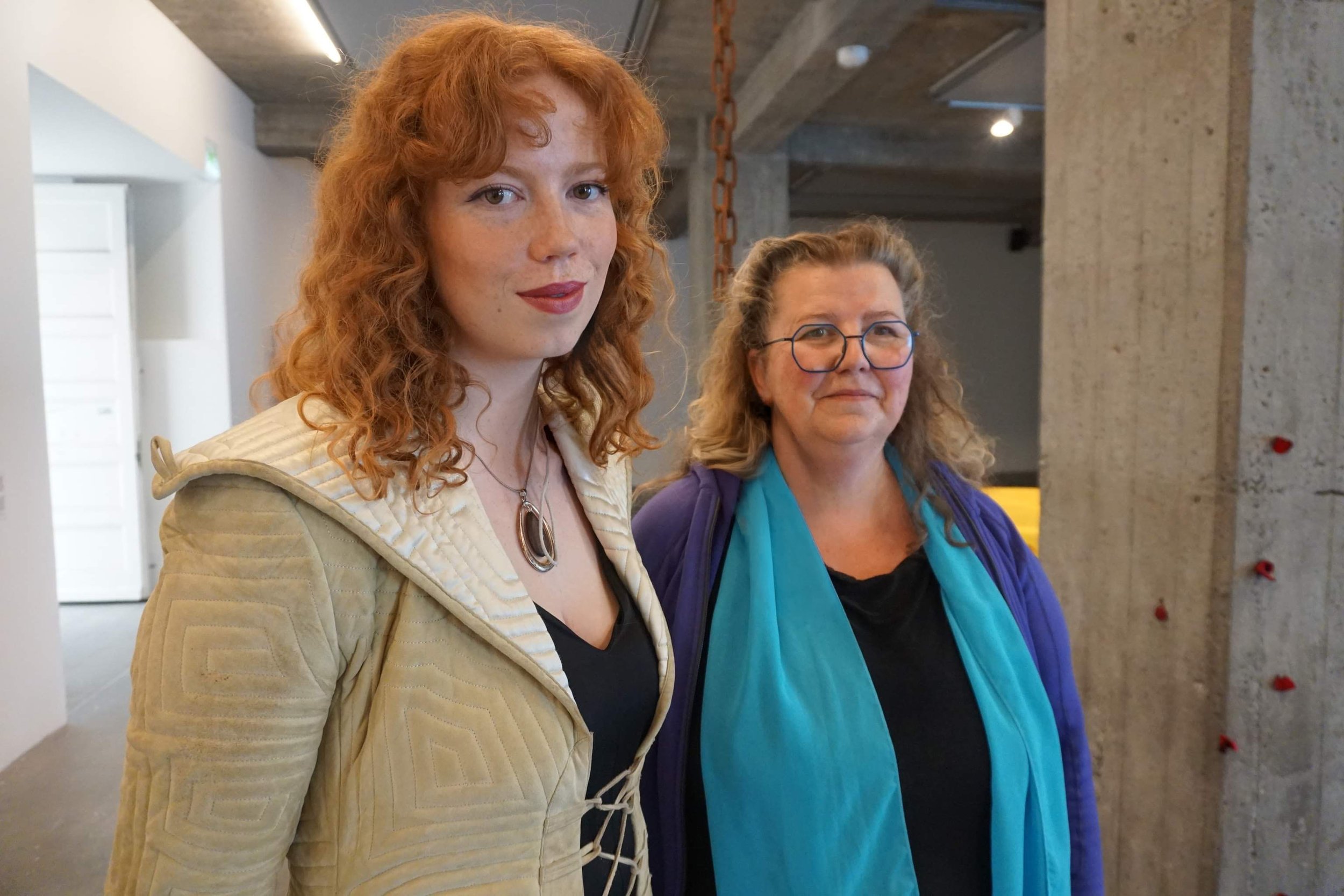
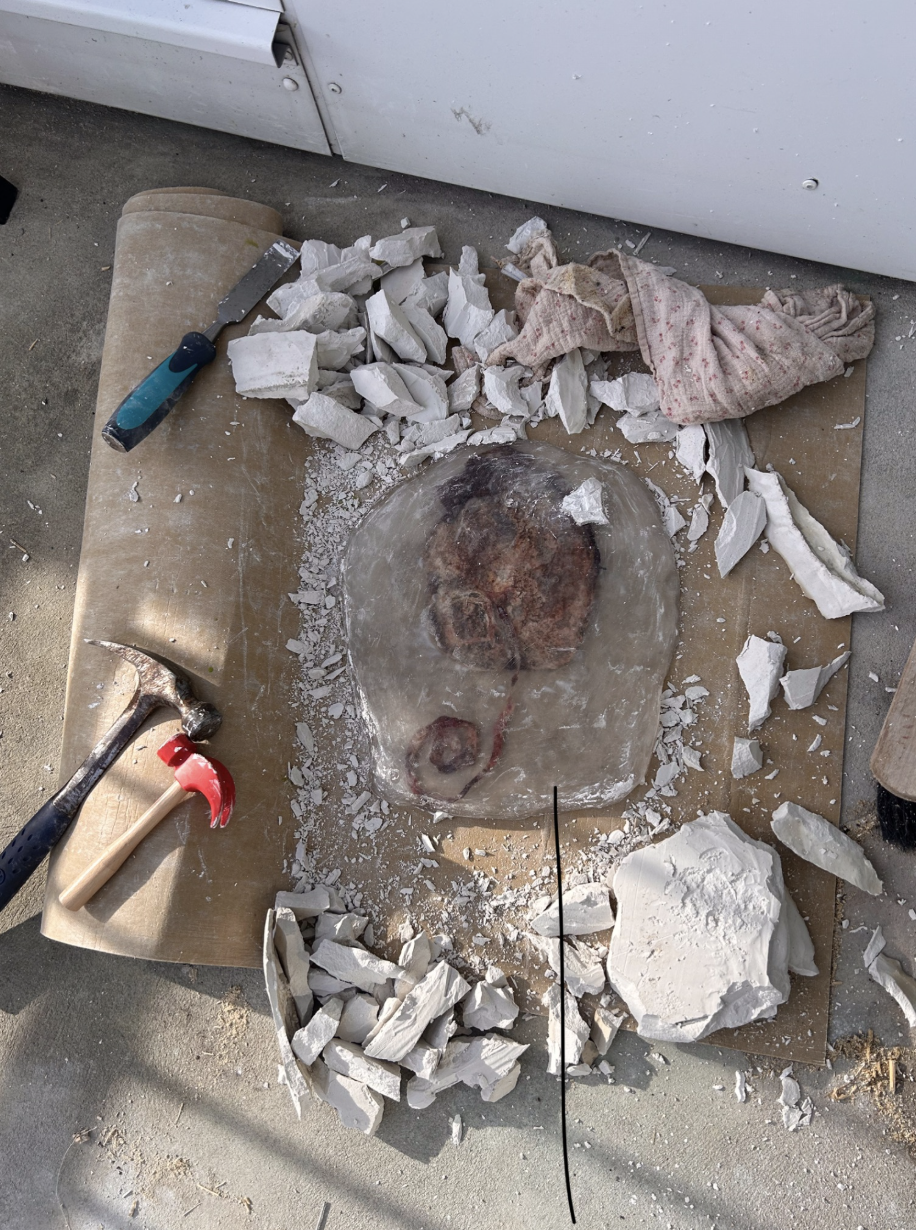
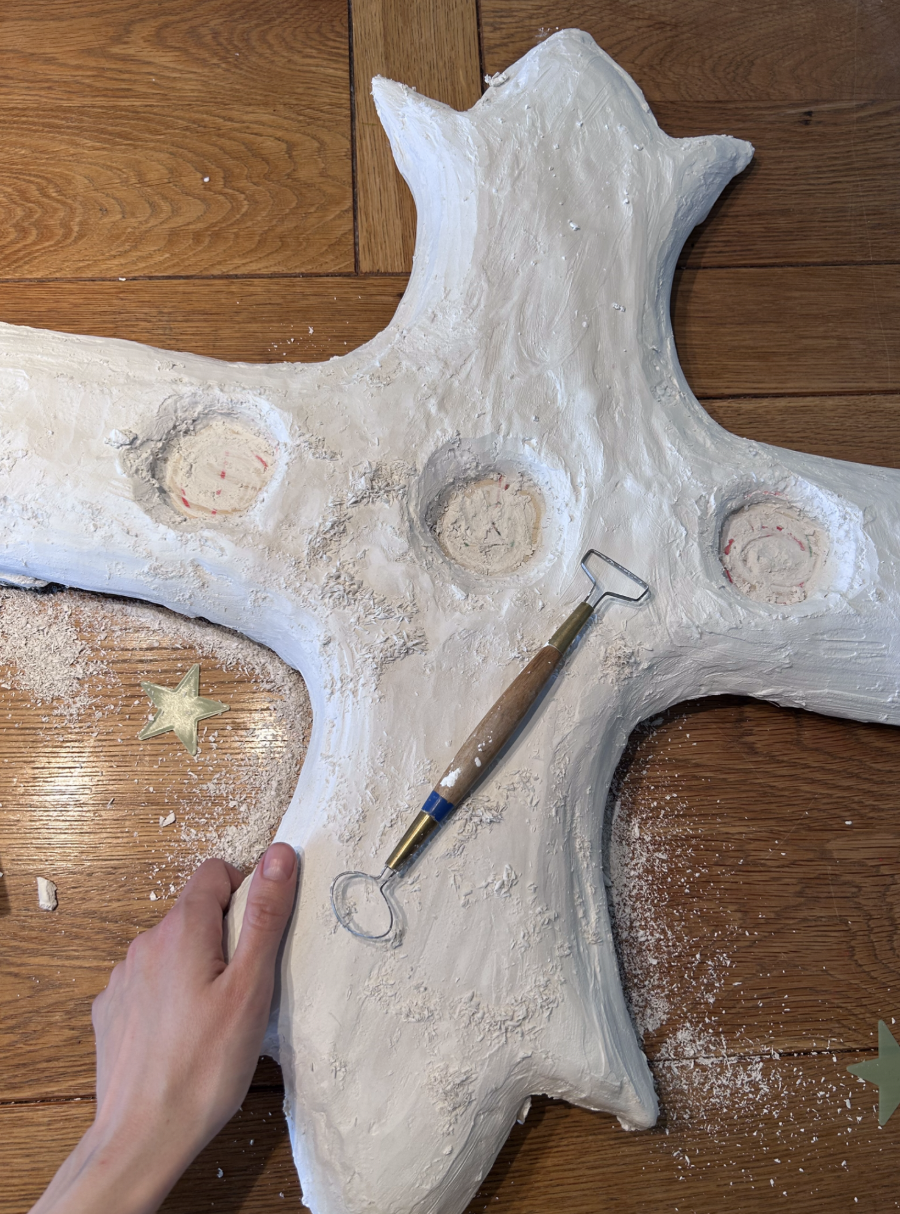
Inga Sigríður Ragnarsdóttir, er með tvö verk á sýningunni SLEPPA í hAughúsi. Bæði verkin eru skúlptúrar úr blá-hvítum stucco/stúkkmarmara og heitir stóra kúpta verkið Sjónarhorn og litli hringurinn þar fyrir ofan nefnist Himinbaugur. Allt frá upphafi ferils síns hefur Inga unnið með stúkkmarmaratæknina sem er handverksaðferð frá Barokk tímabilinu, og er víða að finna í kirkjum og höllum Mið og Suð-Evrópu. Stúkkmarmari er alabastagifs, pigment/litaduft og beinalím en fyrir Ingu er liturinn efniviður, en ekki yfirborð. Katrín Agnes dóttir hennar ólst upp við gerð þessara verka og hjálpaði mömmu sinni við slípun stúkkmarmarans og fylgdi henni þegar hún verslaði hjá KREMER, einum þekktasta pigment/litarduft framleiðandi í Evrópu sem er sérhæfður í gerð ekta upprunalegra litadufta. Verkið Sjónarhorn (frá 1991 endurgert 2026) skilgreinir Inga sem; brot hinnar stóru, hætt komnu, jarðar okkar, séð frá geimnum, en um leið minnir formið á belg eða maga. En litla vekið Himinbaugur (frá 2018) vísar í hreyfingu jarðar í himinhvolfinu. Verk Ingu eru oft samsett form, úr ólíkum efnum eins og leir, tré, stál, steypu eða eins og hér stúkkmarmara. Hún tekur hversdagslega hluti, sker þá niður, tekur mót af þeim. Þrykkir síðan í mótið og nýtt form og ný tenging verður til. Verkin geyma óljósa minningu fyrra hlutverks formsins (hér brot af loki á mjólkurtanki og bökunarform). Hún leitast við að bergmála það liðna á óljósan hátt, en skapa fyrst og fremst nýtt landslag eða nýjan heim.
Katrín Agnes hefur unnið með liti eða litarefni sem listrænt viðfangsefni um nokkurt skeið á margvíslegan hátt í ólíka miðla og mismundi skala fyrir sýningarrými, opinber rými og úti í náttúrunni. Nú í tilefni sýningarinnar SLEPPA, hefur hún unnið litarefni/pigment tileinkað mömmu sinni sem er verkið: IR Blue - Inga Ragnarsdóttir Blár (frá 2026). Það er unnið út frá þeim bláu litarefnu/pigmentum sem Inga hefur notað í gegnum sinn feril. Annað verk Katrínar Agnesar nefnist Scarlet Red, Royal Blue, (2024., photograph. Það er „pigment -reyk verk“, sem er áframhaldandi þróun á ferli hennar. Reykformúlan er pigmentblanda sem pressuð er í töfluformi sem hún þróaði í samvinnu við efnafræðing í Háskólanum í München. Verkið er skráning/ ljósmynd af gjörningi þar sem mismunandi blár reykur, leysist úr læðingi þegar kveikt er í töflunni; og myndast þá litský sem fyllir rýmið = ör-skúlptúr. Verk mæðgnanna og framsetning þeirra er formræn en um leið hugleiðing um hina brothættu fegurð hverfulleikans.
Inga Sigríður Ragnarsdóttir presents two works in the exhibition SLEPPA at hAughús. Both are sculptures made of blue-and-white stucco marble. The larger convex work is titled Perspective (Sjónarhorn), while the small circular work above is titled Sky Circle (Himinbaugur). From the beginning of her career, Inga has worked with the stucco marble technique, a craft tradition dating back to the Baroque period and widely found in churches and palaces throughout Central and Southern Europe. Stucco marble consists of alabaster plaster, pigment, and bone glue. For Inga, colour is not a surface treatment but a material in itself. Her daughter, Katrín Agnes, grew up around the making of these works. She helped her mother polish the stucco marble and accompanied her on visits to KREMER, one of Europe's best-known pigment manufacturers, specializing in the production of authentic historical pigments. Inga describes Perspective (1991, reconstructed 2026) as a fragment of our large and endangered Earth viewed from space. At the same time, the form recalls a bladder or a stomach. The smaller work, Sky Circle (2018), refers to the Earth’s movement within the celestial sphere. Inga's works are often composite forms made from diverse materials such as clay, wood, steel, concrete, or, as in these works, stucco marble. She takes everyday objects, cuts them apart, and makes moulds from them. By casting into these moulds, new forms and new relationships emerge. The works retain a faint memory of the form’s previous function—in this case, fragments of a milk tank lid and a baking mould. She seeks to echo the past in an indistinct way while primarily creating a new landscape or a new world.
For some time, Katrín Agnes has worked with colour and pigments as artistic subject matter across various media and scales, in exhibition spaces, public spaces, and natural environments. For the exhibition SLEPPA, she has created a pigment dedicated to her mother: IR Blue – Inga Ragnarsdóttir Blue (2026). The work is based on the blue pigments that Inga has used throughout her artistic career. A second work by Katrín Agnes is titled Scarlet Red, Royal Blue, (2024). It is a pigment-smoke work that forms part of an ongoing development within her practice. The smoke formula is a pigment mixture compressed into tablet form, developed in collaboration with a chemist at the University of Munich. The work is a photographic documentation of a performance in which differently toned blue smoke is released as the tablet burns, forming a coloured cloud that fills the surrounding space -a micro-sculpture suspended in air. The works of mother and daughter, and the way they are presented together, are formally driven while simultaneously offering a reflection on the fragile beauty of impermanence.
Margrét Stefánsdóttir
@maggastefart (insta)
Margrét Stefánsdóttir (1960) starfaði sem kennari í 20 ár en hafði tekið hlé frá störfum og lagt stund á keramík stuttu áður en hún lenti í alvarlegu hjólaslysi árið 2010. Slysið hafði áhrif bæði á líkamlega hæfni Margrétar og heilastarfsemi og þurfti hún að læra margt upp á nýtt. Í dag vinnur hún mest vatnslitaverk með aðstoðarmanni sínum Sigurði Val. Verk Margrétar á sýningunni Sleppa er hugleiðing um minningar; hvernig við mótum okkur sjálf og fólkið í kringum okkur út frá þeim - og hvað gerist við þær, og sjálfið, þegar við glötum þeim.
Margrét Stefánsdóttir (1960) was an elementary school teacher for 20 years but had taken a break and studied ceramics shortly before a serious bicycle accident in 2010. The accident impacted both her physical skills and brain function severely. Today she mostly works with water colors with her aide Sigurði Val. Margrét’s work featured on the show Sleppa is a contemplation on memories; how we construct ourselves and the people around us from them, and what happens to our memories, and to the self, when we lose them.
Lára Kristín Margrétardóttir
www.larakristin.com / @laramargretard (insta)
Lára Margrétardóttir (1994) skoðar hvernig hægt sé að flétta saman tilfinningaheimi kvenna við berskjöldun listarinnar svo að úr verði áhrifarík og gjöful verk. Hún gerir rannsóknir á flóknu sambandi sínu við móðurhlutverkið, tengslum móður og barns og á sjálfri sér sem dóttur. Á sýningunni Sleppa sýnir hún tvö verk, frásögn af því þegar kona fæðir barn og ástandinu sem á eftir fylgir. Verkin Halló ljúfan, haleljúja og Frosin í tíma og rjóma eru klædd í kvenlegan og helgilegan búning - altari kraftaverksins sem umvefur lífið alla daga en er á sama tíma fullkomlega einstakt: stjarnfræðilegt undur.
250 börn fæðast á hverri mínútu, 360.000 á dag. Salka var eitt af 132 milljónum barna sem fæddust árið 2025.
Lára Margrétardóttir (1994) explores how women's inner emotional worlds can be intertwined with the exposure of art to create effective and rewarding works. She conducts research on her complex relationship with motherhood, the connection between mother and child, and herself as a daughter. In the exhibition Sleppa, she shows two works, the story of when a woman gives birth and the state of mind that follows. The works are in a religious and feminine guise, an altar of the miracle that surrounds life every day but is at the same time perfectly unique - an astronomical wonder.
250 children are born every minute, 360.000 a day. Salka was one of 132 million children born in 2025.
Ragnhildur og Ragnhildur
www.ragnhildur.is
www.ragnhildurweisshappel.com
Febrúar 2026. Ragnhildur og Ragnhildur keyrðu inn Eyjafjörðinn á leið í kaupstað og ræddu sýninguna á leiðinni. Þær veltu fyrir sér frelsinu sem eftirgjöf felur í sér. Þær sáu fyrir sér vökva tveimur ílátum, kannski kerum, þeim tveim. Kerunum er hallað og vökvinn blandast saman óþvingaður og óforskammaður á eigin forsendum á gólfinu og flæðir út um allt. Ofan í rifur og myndar polla. Kannski er vökvinn í kerunum hvor í sínum lit og litirnir blandast þegar þeir mætast. Fjólublár og gulur eða bleikur og blár? Þegar í kaupstað var komið fóru Ragnhildur og Ragnhildur í Bónus og gripu sér tvær perur af handahófi í ávaxtadeildinni. Ragnhildur og Ragnhildur kunna vel að meta ávexti, til inntöku og listsköpunnar og sem táknmyndir fyrir allt og ekkert. Þarna kveiktu þær á perunni; þegar þær litu á formin tvö á viktinni á sjálfafgreiðslukassanum. Þarna eru þau komin, kerin. Ragnhildur dróst strax að þeirri löngu, eilítið óhefðbundnari peru, ‘stóru skeiðinni’ sem virðist passa uppá þessa minni. Ragnhildur hinsvegar speglaði sig í þessari minni, ‘perulegri’ peru, 'litlu skeiðinni' sem reiðir sig á verndun þessarar stærri sem reiðir sig á þessa minni. Úr varð verkið Peruker.
Keðjuverkun sköpunnar, Adam og Almáttugur faðir hans. Við fengum að láni skýrt myndmál þar sem fingur snertast í sköpun. Á milli er bláber, bláþráður? Fín er lína milli þess að halda og sleppa eða kreista eða missa bláberið. Við kreistum það aðeins, það kreistist úr því vökvi. Rauður eins og blóð. Allt eins og það á að vera. Úr varð verkið Eins og vera ber.
Mæðgurnar eru einnig með sín einkaverk á sýningunni Sleppa. Ragnhildur yngri ræddi við Vindsokkinn eins og hún hefur margoft gert. Í þetta sinn sleppir hann sér alveg. Hvort er hann að hlægja eða gráta? Það er spenna í hverjum þræði tilveru hans. Elsku kallinn. Ragnhildur yngri gefur einnig út ljóðabók í 20 merktum eintökum á opnunardegi listasýningarinnar Sleppa. Ljóðabókina kallar hún Einskisfræði. Nothingology á ensku. Hún skilur ekkert í bókinni, enda er ekkert að skilja. Gert er ráð fyrir að lesandi verði engu fróðari eftir lesturinn. Bókin er föst í sama skrensufarinu og fer bara dýpra og dýpra og dýpra á einum puntki. Með ljóðabókinni stillir hún upp eplaskúlptúrum sínum líkt og þeir væru á ávaxtamarkaði. Allt til sölu.
Ragnhildur eldri sýnir verkið Hlusta, afsteypu af nýra og eyra unnin í sílikon. Í austrænum fræðum eru eyrun talin sýnilegur endi nýrnanna og sagt að nýrun opnist í eyrunum. Líffærin eru lík að formi og stærð og bæði háð nákvæmri stjórnun á vökvaflæði sem einmitt skiptir miklu máli fyrir jafnvægi okkar. Verkið fjallar um tengsl og jafnvægi.
In February 2026, Ragnhildur and Ragnhildur were on their way to town, discussing the exhibition along the way. They reflected on the feeling of freedom that comes with letting go. They imagined liquid streaming smoothly from two vessels, perhaps two vases. Liquid is poured out and allowed to mix freely on the floor. Perhaps the liquids are of different colors, blending together as they flow into one another and flowing all over the space, flowing into cracks and forming puddles.
Upon arriving in town, Ragnhildur and Ragnhildur stopped at Bónus and picked two pears at random from the fruit section. They both appreciate fruit, as food, in their artistic practice, and as symbols of everything and nothing. Looking at the two forms on the scale at the self-checkout, Ragnhildur and Ragnhildur looked at each other with a pleasant surprise. There they were: the vessels they were talking about on the way.
Ragnhildur was immediately drawn to the long, slightly unconventional pear, the “large spoon,” which seems to fit around the smaller one. Ragnhildur however saw herself in the smaller, more pear-shaped form, the “small spoon,” which relies on the protection of the larger one, while the larger one, in turn, relies on the smaller. The result was the work Pair.
In the work As it is, imagery borrowed from scenes of creation is used: fingers reaching toward one another. Between them is a blueberry. The line between holding and letting go, squeezing and dropping, is a fine one. Ragnhildur and Ragnhildur squeeze the blueberry slightly. A liquid emerges, red like blood. Everything is as it should be.
The mother and daughter also present individual works in the exhibition. Ragnhildur the younger shows The Windsock, a work she has been in conversation with for years. This time he surrenders to the feelings. Is he laughing or crying? It is impossible to tell. There is tension in every thread of his being. On the opening day she also launches her poetry book Nothingology in an edition of twenty numbered copies, accompanied by her Apple sculptures as if they were displayed at a fruit market.
Ragnhildur the elder presents her work Listen, a silicone cast of a kidney and an ear. In Eastern traditions, the ears are considered the visible extension of the kidneys, and it is said that the kidneys open into the ears. The two organs are similar in form and size and both depend on the careful regulation of fluid flow, something essential to maintaining balance. The work reflects on connection and equilibrium.
Þorgerður Þórhallsdóttir
Á ljósmyndunum sést glitta í verk móður minnar og þau ásamt blómum og ávöxtum mynda still life uppstillingar. Allir hlutirnir í uppstillingunni minna okkur á forgengileika tímans, blómin og ávextirnir hafa nú þegar gengið sína leið og gips skúlptúrararnir munu ekki endast að eilífu heldur. Til grundvallar verkinu er klassíska hugtakið úr listasögunni: ‘memento mori’ (mundu að þú munt deyja).
Þorgerður Þórhallsdóttir (f. 1989) útskrifaðist af myndlistardeild Listaháskóla Íslands árið 2013 og lauk MFA-gráðu frá Konsthögskolan i Malmö í Svíþjóð árið 2016. Hún lauk MA-gráðu í safnafræði frá Háskóla Íslands 2021. Minni og skynjun mynda kjarnann í listsköpun Þorgerðar.
Rósa Gísladóttir
Verkið Four Sketches samanstendur af fjórum hillum með mismunandi skúlptúrum. Þarna eru allskonar módel sem ég hef gert í gegnum tíðina t.d. frumdrög að stærri skúlpúrum sem ég gerði á 10. áratugnum og litlum gips skúlptúrum sem eru nýrri og hef síðan stækkað. Á þessari sýningu vinnum við mæðgur báðar með ‘still life’ uppstillingar, af einskærri tilviljun. Á einni ljósmynd hennar má sjá glitta í egglaga skúlptúr sem er einmitt á einni hillunni í mínu verki. Eggið táknar upphaf og nýtt líf en eldurinn í sömu uppstillingunni táknar eyðileggingu og endalok.
Rósa Gísladóttir (f. 1957) nam myndlist í Þýskalandi, Englandi og á Íslandi. Verk hennar hafa verið sýnd víða, bæði á Íslandi og erlendis, meðal annars í Scandinavia House í New York, Saatchi Gallery í London, Listasafni Reykjavíkur, Hafnarborg, Listasafni Árnesinga og hjá Berg Contemporary. Árið 2020 varð Rósa fyrst til að hljóta Gerðarverðlaunin, sem veitt eru framúrskarandi myndhöggvara.
Four Sketches consists of four shelves displaying a variety of sculptures. The installation brings together a range of models I have created over time, including early studies for larger sculptures from the 1990s, as well as more recent small-scale plaster works that I have since further developed and enlarged.
In this exhibition, we—mother and daughter—both engage with still life compositions, coincidentally. In one of her photographs, an egg-shaped sculpture can be seen, which also appears on one of the shelves in my work. The egg symbolizes beginnings and new life, while the fire within the same composition suggests destruction and finality.
Rósa Gísladóttir (b. 1957) studied art in Germany, England and Iceland. Her work has been exhibited widely in Iceland and abroad, including in Scandinavia House in New York, Saatchi Gallery in London, Reykjavík Art Museum, Hafnarborg Centre of Culture and Fine Art, LÁ Art Museum and Berg Contemporary. In 2020, Rósa became the first recipient of the Gerður Prize, awarded to an outstanding sculptor.
Helga Thorlacius Finnsdóttir og Áslaug Thorlacius
Helga: Þegar amma mín lést varð í raun óumflýjanlegt, verandi að sýna á sýningu þar sem mæðgur eru í fyrirrúmi, að verkið snerti á því. Undanfarin ár hef ég mikið unnið með hár. Í mínum huga er hárið sjálfstæð, lifandi teikning en auk þess er það stútfullt af upplýsingum. Hárið geymir ekki aðeins erfðaefni einstaklings heldur einnig minningar.
Ég límdi saman hár allra kvenna í móðurætt minni, þar á meðal ömmu - enda í enda. Úr varð til eitt langt hár sem svo er undið upp í hönk á hesputré. Verkið er eins konar ættartré. Til verður varanleg og áþreifanleg tenging sem hverfur ekki þó svo að eigendur háranna geri það á endanum.
Áslaug: Ég hef starfað sem myndlistarmaður, meðfram öðrum störfum, í 35 ár en Helga er að hefja sinn feril. Mín fyrsta hugsun var þessvegna að ég ætti að laga mitt verk að hennar til að skapa tengingu. Ég hef verið að prófa mig áfram með grafíkpressu og Helga hefur verið að nota hár. Okkur áskotnaðist slatti af gömlum hárkollum fyrir nokkrum mánuðum og ein þeirra, ljósbrún, hrokkin kolla með stórum liðum höfðaði sérstaklega til mín. Ég ákvað að þrykkja af henni mynd. Mamma mín var einmitt með ljósbrúnt hár í stórum liðum og á ákveðnu tímabili þegar ég var lítil stelpa var hún klippt nokkurn veginn eins og kollan. Móðuramma mín var með svipað hárafar en í minningunni er hún alltaf með talsvert styttra hár. Verkið er portrett af mömmu og öllum hinum kynslóðunum. Mamma lést í apríl og ég tileinka minningu hennar verkið mitt.
Áslaug lauk námi við MHÍ 1991 BA próf í rússnesku og bókmenntafræði 1993. Hún hefur haldið fjölda einkasýninga og tekið þátt í enn fleiri samsýningum en samhliða hefur hún unnið við kennslu, verið formaður SÍM, framkvæmdastjóri Kvennalistans og fleira. Hún hefur verið skólastjóri Myndlistaskólans í Reykjavík frá 2014.
Helga kláraði BA próf í myndlist frá LHÍ vorið 2025 og er þetta þriðja samsýningin sem hún tekur þátt í frá útskrift. Samhliða myndlistinni starfar hún við kennslu og stuðning í Hagaskóla og sem sviðsmaður í Þjóðleikhúsinu.
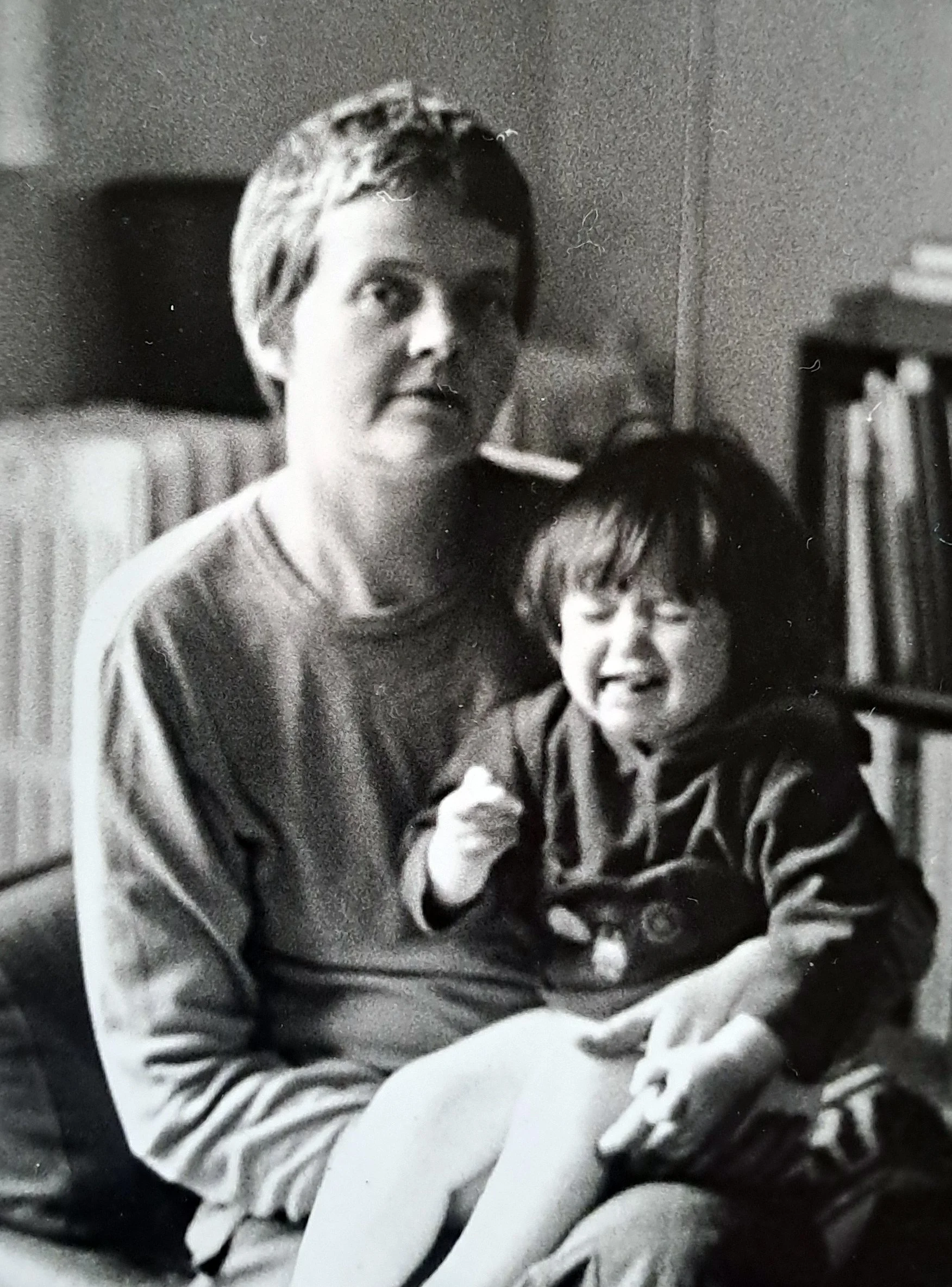
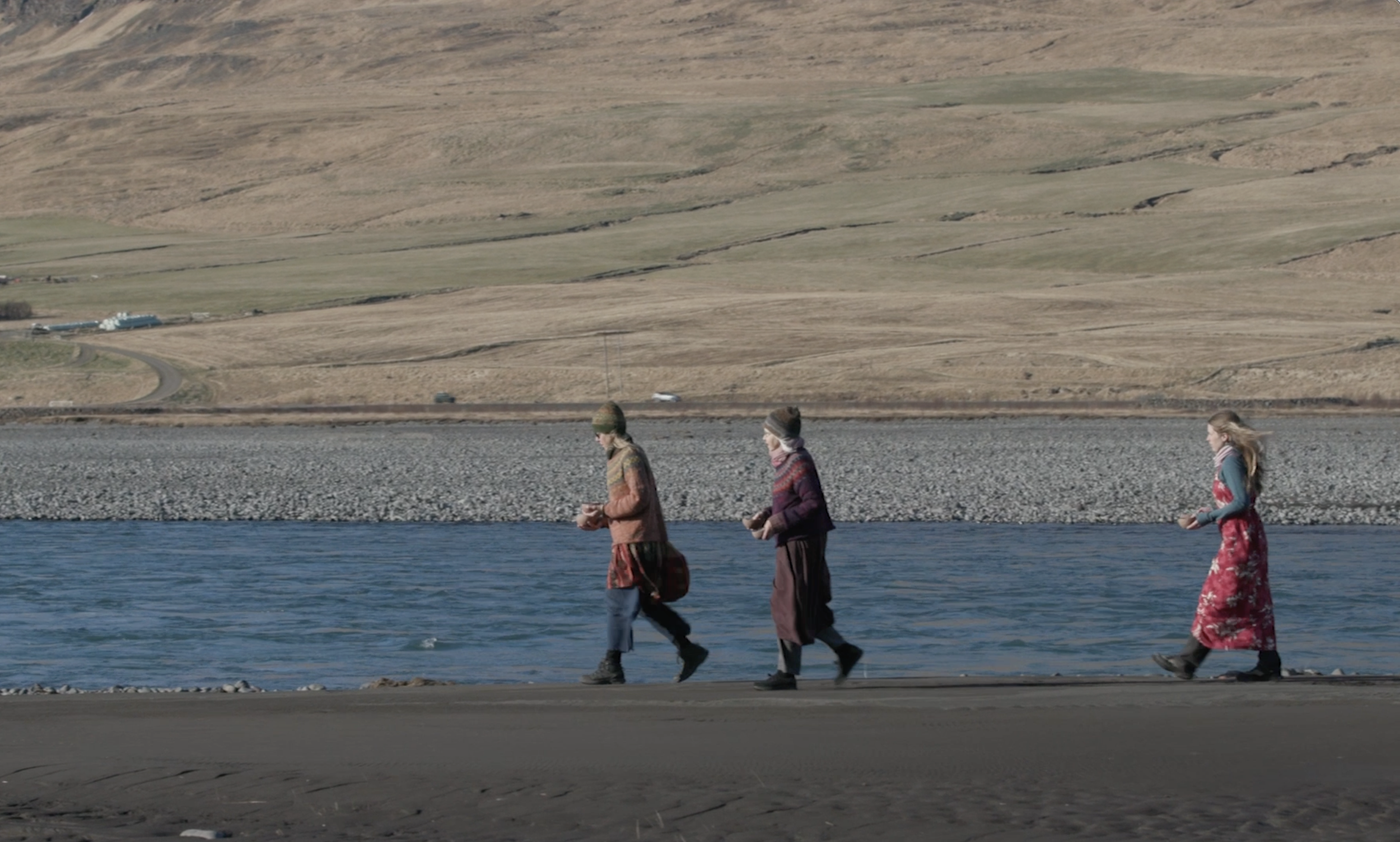
Þrjár kynslóðir mæðgna, Borghildur Óskarsdóttir, Ósk Vilhjálmsdóttir og Hulda Ragnhildur Hjálmarsdóttir, vinna saman að verkinu Jöklamjólk; krydd í straumi.
Borghildur nam myndlist í Reykjavík og Edinborg. Hún hefur á löngum ferli unnið með keramik, skúlptúr, texta og vídeó, oft í tengslum við landslag, sögu og umhverfi í umbreytingu. Verk hennar hafa meðal annars beint sjónum að sögu forfeðra hennar og að Þjórsá og fyrirhuguðum virkjanaframkvæmdum þar.
Ósk stundaði myndlistarnám í Reykjavík og Berlín. Hún vinnur í blandaða miðla og hefur um árabil fengist við jökulfljót, umbreytingar landslags og tengsl manns og náttúru. Meðal annars hefur hún unnið með Jöklu og Jökulsá á Fljótsdal norðan Vatnajökuls, þar sem griðland hreindýra og heiðagæsa hvarf undir Hálslón vegna Kárahnjúkavirkjunar. Verk hennar spretta gjarnan úr langvarandi dvölum á vettvangi, þar sem ganga er hluti af rannsókn og listrænni vinnslu.
Hulda Ragnhildur er hljóðlistamaður með bakgrunn í tónlist og arkitektúr. Hún vinnur með tilraunakennda raftónlist og hljóð sem efnivið. Hún stundaði nám við Listaháskóla Íslands og Sibelius-akademíuna í Helsinki. Hulda hefur samið tónlist fyrir sviðsverk, gefið út plötu hjá SÖVN Records, hlotið fyrstu verðlaun fyrir verkið Auð og tóm á vegum ErkiTíðar og tekið þátt í UNM.
Verkið Jöklamjólk; krydd í straumi, á sér upphaf í gjörningi sem framkvæmdur var við Héraðsvötn í Skagafirði, skammt frá sýningarstaðnum í Héraðsdal. Fyrir gjörninginn voru mótaðar leirskálar á vinnustofu Borghildar. Skálarnar voru óbrenndar, þannig að leirinn skilar sér auðveldlega aftur til jarðar og rennur saman við landslagið. Í skálarnar var sett túrmerik og kardimommur sem Ósk flutti með sér frá bökkum Ganges á Indlandi. Jökulfljóti sem á upptök í Himalaja og hefur tengt menningarheima um aldir. Leirskálunum var síðan fleytt í jökulsána. Vídeóverkið er heimild um gjörninginn. Hulda Ragnhildur semur og flytur hljóðmynd verksins, byggða á steinagjörningi við vatnið, hljóðið umbreytist í raftónlist sem liggur undir myndinni. Samhliða vídeóinu er teikning Borghildar af upptökum fljótsins við Hofsjökul, þar sem mjólkurlitaðar ár streyma úr júgrum jökulsins.
Credits
Director / Artist: Ósk Vilhjálmsdóttir
Artist / Sound: Hulda Ragnhildur Hjálmarsdóttir
Artist: Borghildur Óskarsdóttir
Camera: Jón Karl Helgason
Camera Assistant / Editing: Þuríður Einarsdóttir
Production support: Krummma-film
Three generations of mothers and daughters, Borghildur Óskarsdóttir, Ósk Vilhjálmsdóttir and Hulda Ragnhildur Hjálmarsdóttir, collaborate on the work Milky Rivers: Spices in the Current.
Borghildur studied fine art in Reykjavík and Edinburgh. Over a long career she has worked with ceramics, sculpture, text and video, often in relation to landscape, historical inquiry and environments in transformation. Her work has, among other themes, addressed family histories as well as the river Þjórsá and proposed hydroelectric developments there.
Ósk studied fine art in Reykjavík and Berlin. She works across mixed media and has, for many years, engaged with glacial rivers, transformed landscapes, and human–nature relations. This includes work with Jökla and Jökulsá á Fljótsdal north of Vatnajökull, where important grazing areas for reindeer and pink-footed geese were flooded under lake Hálslón by the Kárahnjúkar hydroelectric project. Her practice often emerges from extended fieldwork, where walking becomes an integral part of research and artistic process.
Hulda Ragnhildur is a sound artist with a background in music and architecture. She works with experimental electronic music and sound as material. She studied at the Iceland University of the Arts and at the Sibelius Academy in Helsinki. Hulda has composed music for theatre, released an album on SÖVN Records, received first prize for the work Auð og tóm commissioned by ErkiTíð, and participated in UNM.
The work, Milky Rivers: Spices in the Current, originates in a performance carried out at the glacial river, Héraðsvötn in Skagafjörður, near the exhibition site in Héraðsdalur. Prior to the performance, unfired clay bowls were formed in Borghildur’s studio. Left unfired, the clay easily returns to the earth and merges with the landscape. Turmeric and cardamom were placed in the bowls, brought by Ósk from the banks of the glacier river, Ganges in India, originating in the Himalayas that has connected cultures for centuries.The bowls were then set afloat into the river. The video work documents the performance. Hulda Ragnhildur composed and performs the soundscape, developed from a stone performance at the river, the sound is transformed into an electronic composition underpinning the video. Alongside the video is a drawing by Borghildur depicting the source of the river at Hofsjökull glacier, where waters emerge, flowing like milk from the glacier’s udder.
Credits
Director / Artist: Ósk Vilhjálmsdóttir
Artist / Sound: Hulda Ragnhildur Hjálmarsdóttir
Artist: Borghildur Óskarsdóttir
Camera: Jón Karl Helgason
Camera Assistant / Editing: Þuríður Einarsdóttir
Production support: Krummma-film